Wool Crush™
- 4.8
- Rating
- 10.00M
- Installs
- Free
- Price
 Analysis by App-foxy
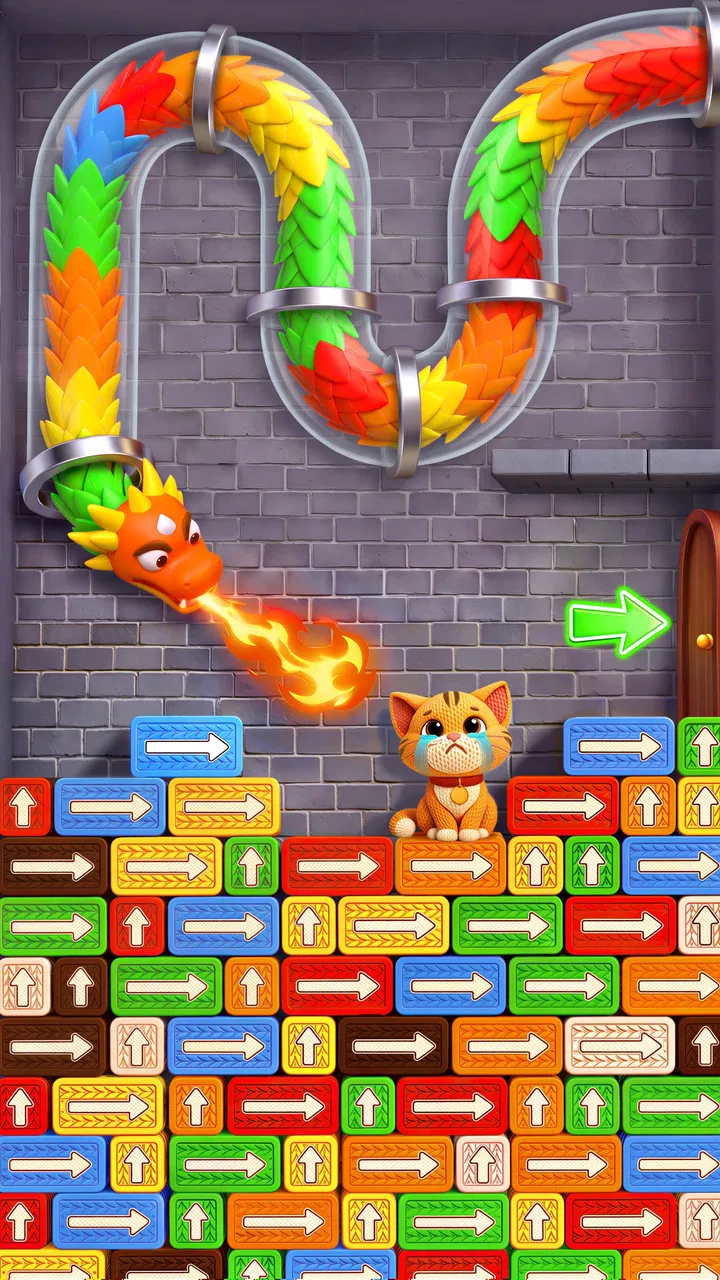
I went into Wool Crush™ - Yarn Color Sort expecting a light puzzle game, and that is exactly where it fits best: short sessions, colorful objects, and a simple goal built around sorting and clearing wool. The unusual hook is that the game places this yarn-focused puzzle idea beside a car-jam-style challenge, while a cat needs saving from a wool-knitting dragon. That combination gives the game more personality than a plain color-matching title.
It is a free puzzle game from Astrasen Global, rated for Everyone. The large audience is easy to understand: it has passed one million installs and holds a 4.7 average from around 78 thousand ratings. Those figures suggest that the basic loop is approachable, but they do not remove the need to decide whether this particular style of puzzle suits you. I found it most enjoyable when I treated it as a quick mental break rather than a game I had to rush through for long periods.
What the first few minutes feel like
The opening experience is deliberately easy to understand. You are presented with wool-related pieces and a board that asks you to make sensible sorting decisions. The car-jam influence matters because the challenge is not only about noticing colors. It also encourages you to think about order, space, and which move will keep the board from becoming harder to manage.
You May Also Like

 Blood Strike: 2.5 Anniversary
Blood Strike’s Loadouts Turn Every Drop Into a Tactical Gamble
A close look at Blood Strike’s custom loadouts: how fast access to signature weapons reshapes its battle royale rhythm, rewards preparation, and narrows the gap between fights.

 Pandora - Music & Podcasts
Pandora’s Music Is Easy to Start, but Harder to Recover
Pandora’s strength is its low-effort path from a seed to a station. Its weak spot is how much confidence it asks you to place in connection, setup, and quiet recovery.

 8 Ball Pool
 Is Built on Rivalries, Rematches, and Routine
A close look at the rivalries, rematches, shared routines, and unanswered safety questions that turn a quick pool match into a persistent mobile community.

 Samsung Music
’s Quiet Strength Is Playing What You Already Own
Its reach comes less from spectacle than from dependable access to a personal library. That simplicity is both the app’s strongest retention engine and its ceiling.

 AccuWeather: Weather Radar
AccuWeather Review: A Quick, Clear Forecast for Everyday Decisions
For everyday plans, the best forecast is the one you can understand quickly. AccuWeather makes rain timing, radar, and local conditions easy to act on, with a few trade-offs.

 Hill Climb Racing
Why Hill Climb Racing Still Turns Crashes Into One More Run
A tiny car, a bumpy hill and one more upgrade: Hill Climb Racing keeps resurfacing because its simple chaos makes every near-miss feel personal.
More From Our News Desk



That distinction is useful for first-time players. If you approach every level by grabbing the most obvious matching item, you may make progress at first but create awkward leftovers later. I had better results when I paused for a moment and looked at the whole arrangement before making the first move. The game rewards attention more than frantic tapping.
The rescue theme gives the otherwise abstract sorting task a small sense of purpose. It is not the reason I kept playing, but it makes the presentation friendlier, especially for younger players or anyone who prefers a puzzle with a playful setting instead of a purely technical interface.
The experience is also easy to place beside familiar alternatives. Traditional match-three games usually emphasize forming combinations quickly, while classic sorting puzzles often focus on moving items between containers with strict capacity limits. Wool Crush sits somewhere between those ideas. Its appeal comes from combining visual sorting with the traffic-like problem of deciding what can move first.
Who will probably enjoy it
I would recommend it to players who like color organization, compact levels, and puzzles that become more interesting once the obvious move is no longer automatically the best move. It is also a good fit for someone who wants a game that can be opened for a brief session without learning a large set of controls or a complicated story.
Parents looking for an Everyone-rated puzzle may find the presentation approachable, although I would still pay attention to how a child handles optional purchases. The game is free to start, and its in-app purchases range from $0.49 to $99.99 per item. For a family device, I would make sure purchase controls are configured before handing it over.
On the other hand, this is not my first choice for someone seeking a deep logic game with extensive explanations, elaborate progression systems, or a competitive community. The charm comes from the immediate board challenge, not from a broad strategy layer. Players who dislike repeated sorting or who want a story-led adventure may lose interest quickly.
Getting started without overthinking the setup
The installation barrier is low for compatible devices because the game supports Android versions from 6.0 onward. Once it is installed, I suggest beginning with the sound and visual presentation at a comfortable level, then entering the first puzzle without trying to predict every later mechanic. The early stage is more useful as a tutorial through play than as something that needs a detailed plan.
My practical advice is to use the first board to identify three things: which wool pieces can be grouped, which spaces are currently blocked, and which move might open access to another useful piece. That quick scan takes only a few seconds, but it prevents the common beginner mistake of treating the board as a sequence of isolated matches.
Because the game mixes yarn sorting with car-jam-like movement, the first setup is also a good time to notice how the board communicates available actions. Look for visual cues rather than tapping randomly. If a piece appears attractive but moving it would seal off a needed route, leave it in place until the surrounding arrangement is clearer.
The current version is 1.330, so players installing it today should expect the experience associated with that release. I would still approach the game as a compact puzzle rather than assuming that a version number means a large, constantly changing system. What matters during the first session is whether the board logic feels readable to you.
The first meaningful success
For me, the first satisfying success came from making a move that looked less rewarding immediately but improved the whole board. That is the habit I would encourage new players to build. Do not measure a good move only by how much wool disappears at once. A move can be valuable because it exposes a matching piece, frees a lane, or keeps several future choices available.
A simple method works well:
Scan the visible colors and note the groups that are nearly ready to clear.
Check whether moving one group will block another route or create a crowded area.
Choose the action that improves access, even if it is not the largest immediate clear.
After the board changes, pause again instead of repeating the same gesture automatically.
This approach makes the first win feel earned without making the game intimidating. It also reveals the main strength of the design: the puzzle is readable at a glance, but careful sequencing gives it more depth than a simple “find the same color” exercise.
When I made an error, the frustration usually came from losing future flexibility rather than from failing to recognize a color. That is an important distinction. If you struggle, try changing the order of your actions before assuming that you misunderstood the objective. Often the board is asking for patience, not a faster reaction.
The confusion points new players should expect
The biggest source of confusion is the relationship between sorting and movement. A player familiar with basic color puzzles may expect every matching opportunity to be immediately useful. Here, the surrounding arrangement matters. A correct-looking action can still be inconvenient if it leaves the remaining pieces in a poor order.
Another adjustment is learning not to fill your attention with the cat and dragon theme. The story framing makes the game memorable, but the board is where your decisions matter. I found it easier to focus on the available routes first and treat the rescue objective as motivation in the background.
It is also easy to play too quickly because the controls feel simple. Simple controls do not mean every level should be solved impulsively. If the board becomes tangled, stop tapping and inspect the pieces that are currently limiting movement. The most useful question is often, “Which item is preventing access to the next useful group?” rather than, “Which group can I clear right now?”
Players may also wonder whether the game is suitable for a short break or requires a long uninterrupted session. In my experience, its puzzle format works well for brief play because the core action is immediate. Still, a difficult arrangement can demand concentration, so I would avoid starting a challenging board when you need to focus on something else at the same time.
How to make progress without wasting good moves
Once the first successes become comfortable, I recommend adopting a “space before score” mindset. When two moves seem equally attractive, prefer the one that leaves more options visible. This is especially helpful on boards where several colors are interwoven and a premature clear can make the remaining layout feel cramped.
A second useful habit is to identify temporary blockers. Some pieces are not valuable because they match immediately; they are valuable because moving them changes the board’s structure. Treat those pieces as keys. Before using them, consider whether they open one route or several. That small distinction can decide whether the next sequence feels smooth or forced.
Third, do not restart mentally after one imperfect move. The game becomes more interesting when you adapt to the board you have created. If a move was not ideal, look for the new access it produced. This keeps the experience from turning into trial-and-error repetition and makes each level a quick exercise in recovery.
These are not complicated techniques, but they separate casual tapping from deliberate play. They also explain why the game can appeal to both younger players and adults: the rules are approachable, while the best decisions depend on planning several actions ahead.
Where it fits in everyday use
I can see myself opening it during a short commute, while waiting for an appointment, or after finishing a task and wanting something that occupies my hands without demanding a large time commitment. The bright yarn theme makes it feel lighter than a serious logic title, while the movement order gives enough thought to avoid becoming completely mindless.
For example, if I had only a few minutes before leaving home, I would play a board with the goal of practicing clean sequencing rather than chasing a perfect result. If I had more time in the evening, I would slow down and examine why a particular arrangement became difficult. That flexibility is one of the game’s strongest practical qualities.
It is less suitable when you want a calm, decoration-focused sorting experience with almost no pressure. The car-jam element introduces blockage and order management, so the game can become mentally busy even though its appearance is cheerful. Likewise, players who prefer word puzzles, number logic, or narrative exploration will find the wool-based board less compelling than their usual alternatives.
Free access, purchases, and the sensible way to approach them
The game can be played without an upfront price, which makes trying it straightforward. The presence of optional items priced from $0.49 to $99.99 means I would treat purchases as a personal boundary rather than part of the installation decision. New players should first decide whether the basic puzzle loop is enjoyable before spending anything.
That advice is particularly important for children. The Everyone rating describes the content style, not a guarantee that every household will want unrestricted access to purchases. On a shared phone or tablet, I would use the device’s purchase safeguards and make the rules clear before play begins.
For adults, the trade-off is simple: if the free experience already provides the kind of short puzzle sessions you want, there is no reason to buy immediately. If an optional item removes a specific annoyance for you, consider whether it improves enjoyment or merely encourages faster progress. I prefer to let the board-solving itself remain the reason to continue.
How it compares with familiar puzzle choices
Compared with match-three games, this title feels less dependent on rapid pattern spotting and more dependent on arranging the order of actions. Compared with container-based color sort games, it adds a more traffic-like sense of access and blockage. That makes it a better choice for someone who enjoys planning routes through a crowded board rather than simply placing colors together.
It does not replace a traditional match-three game for players who want chain reactions and quick visual rewards. It also may not satisfy someone who enjoys the strict, methodical rules of classic sorting puzzles and prefers a more minimal presentation. Wool Crush is most distinctive when you want both the friendliness of color sorting and the mild tension of deciding what can move first.
The cat-and-dragon framing is another difference, although I would describe it as a presentation advantage rather than a major gameplay system. It gives the puzzle a recognizable identity, but the long-term reason to stay is still the board design. If the sorting decisions do not appeal to you, the theme alone is unlikely to carry the experience.
What I would do after the first session
After the first meaningful win, I would not immediately chase speed. I would replay the decision in my head and notice which move created the most useful access. That makes the next board easier to read and turns the game into a small daily practice in sequencing.
I would also keep sessions varied. Some days, I would play casually and accept an imperfect result. On others, I would deliberately slow down and look for a solution that preserves more options. This prevents the simple controls from becoming repetitive and gives the same core mechanics different levels of attention.
If you are deciding whether to install it, my recommendation is straightforward: try it if you like colorful sorting puzzles but want more emphasis on movement order and blocked routes. Give it a pass if you need deep narrative content, advanced competitive systems, or a completely pressure-free experience. The best reason to play is the small satisfaction of turning a crowded wool board into a clear sequence of sensible moves.
Overall, Astrasen Global has made a friendly puzzle game with a clear first step and enough planning to reward patience. Its free entry, Everyone rating, and broad install base make it easy to consider, while the yarn-and-rescue presentation keeps it distinct from ordinary sorting apps. My honest view is that it works best as an accessible, repeatable brain break: not a huge strategy game, but a polished little challenge for anyone who enjoys finding the right order.
Wool Crush™ - Yarn Color Sort is therefore worth trying when you want a puzzle that explains itself through play. Start slowly, watch which pieces control access, and judge each move by the options it leaves behind. That approach gets you to the first real success without unnecessary confusion and gives the game its fairest chance to win you over.
FAQs for Wool Crush™
01What is Wool Crush™ - Yarn Color Sort?
Wool Crush™ - Yarn Color Sort is a puzzle game where players sort and match colorful yarns to complete levels. The game offers a visually appealing experience with vibrant graphics and engaging gameplay mechanics, making it enjoyable for both casual and dedicated puzzle enthusiasts.
02How does the gameplay work in Wool Crush™?
In Wool Crush™, players are presented with a variety of yarn colors that need to be sorted and matched based on specific patterns. The objective is to complete each level by strategically moving the yarns into the correct order, using the least number of moves possible to achieve higher scores.
03Are there any in-app purchases in Wool Crush™?
Yes, Wool Crush™ offers in-app purchases that allow players to buy additional features, such as power-ups and extra lives. These purchases are optional and designed to enhance the gameplay experience, providing more opportunities to overcome challenging levels.
04Is Wool Crush™ suitable for all age groups?
Wool Crush™ is designed to be family-friendly and is suitable for players of all ages. The intuitive controls and colorful graphics make it accessible to younger players, while the increasing difficulty levels provide a challenge for older audiences and seasoned gamers.
05Does Wool Crush™ require an internet connection to play?
Wool Crush™ can be played offline, making it a convenient option for users on the go. However, an internet connection is needed for certain features, such as accessing leaderboards, syncing progress across devices, and downloading updates for new levels and content.
Pros
- Addictive and engaging gameplay.
- Vibrant and colorful graphics.
- Smooth and intuitive controls.
- Regular updates with new levels.
- Offline play available.
Cons
- Ads can be frequent and intrusive.
- Limited free hints available.
- Some levels feel repetitive.
- In-app purchases can be costly.
- Requires good color vision.

Wool Crush™
Gallery